
What are Prayer flags?
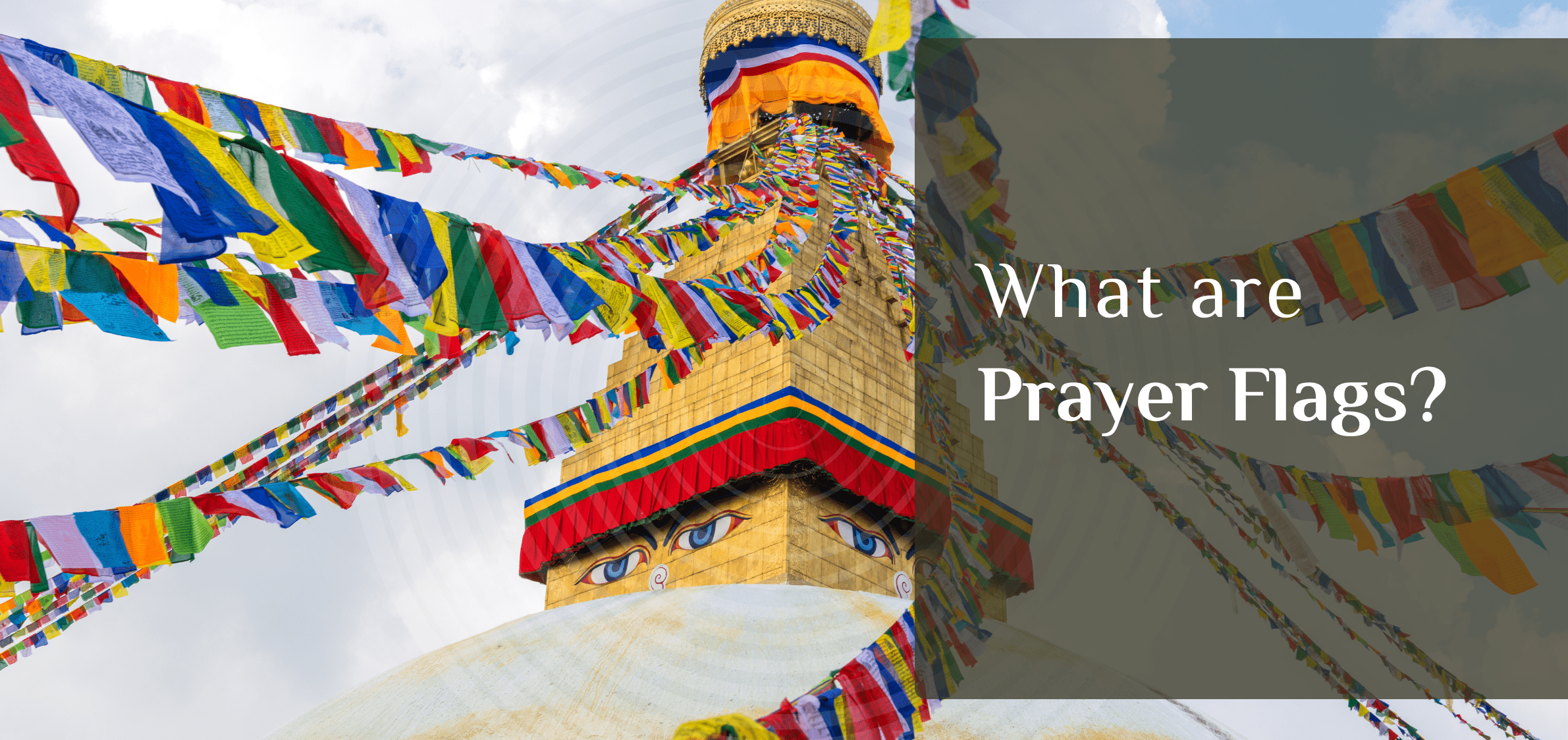
Tibetan prayer flags hold deep spiritual and cultural meanings for the people in the himalayas. Each flag, with its specific colors and symbols, serves a purpose: As a little girl I enjoyed watching monks making prayer flags, with inks and stamps…which were then used to change over with the old prayer flags at home, during rituals and ceremonies.
1. Colors and Their Representations:
- Blue (Sky): Symbolises space and the vastness of the universe. It is associated with the idea of reaching for the infinite.
- White (Air): Represents purity, wisdom, and the air element. It signifies clarity and the expansiveness of the mind.
- Red (Fire): Embodies the transformative power of fire and represents courage and the burning away of negative karma.
- Green (Water): Symbolises the fluidity and adaptability of water. It’s associated with harmony and balance.
- Yellow (Earth): Represents stability, grounding, and the nurturing quality of the earth.
2. Symbols and Their Meanings:
- Mantras: These are sacred syllables or phrases inscribed on the flags. The most common mantra is “Om Mani Padme Hum,” which is believed to invoke compassion and wisdom.
- Buddhist Deities: Depictions of various deities, such as Avalokiteshvara (the Bodhisattva of Compassion) or Guru Rinpoche (Padmasambhava), are often included. These figures are revered for their spiritual significance and protective qualities.
- Eight Auspicious Symbols: These include the lotus flower (purity and spiritual awakening), the conch shell (the spread of teachings), and the endless knot (eternal wisdom and interconnectedness).
3. Purpose and Practices:
- Spreading Blessings: The primary purpose is to spread good fortune, compassion, and positive energy. As the wind moves the flags, it is believed that the prayers and blessings are carried to all beings.
- Creating Harmony: The flags are intended to harmonise the environment, enhancing the balance and purity of the surroundings.
- Merit Accumulation: Hanging prayer flags is also a way to accumulate merit and generate positive karma, benefiting both the individual and the broader community.
4. Placement and Use:
- High Locations: Flags are often hung in elevated places like mountain ridges or rooftops so that the wind can carry the prayers effectively.
- Respectful Handling: Traditionally, it is important to handle prayer flags with respect, ensuring they are not allowed to touch the ground or become soiled. Once they are worn out, they should be disposed of respectfully, often through burning or by placing them in a sacred location.
Overall, Tibetan prayer flags are a beautiful and meaningful way to express spiritual intentions and contribute to the well-being of the world.
